


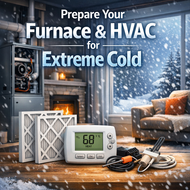
How to Prepare Your Furnace and HVAC System for Extreme Cold and Heavy Snowfall
Posted by Kyle Brown on Jan 23rd 2026
When winter storms and freezing temperatures hit, your furnace and HVAC system become the most critical components of your home. Extreme cold can strain heating systems, while heavy snowfall can block vents and create safety hazards. Preparing in advance ensures your home stays warm, safe, and energy-efficient.
Preventative Maintenance Tips
-
Schedule a Professional Inspection
- Have a certified technician inspect your furnace and HVAC system before the cold sets in. This helps identify worn parts, leaks, or potential failures before they become emergencies.
-
Replace or Clean Air Filters
- Dirty filters restrict airflow, forcing your system to work harder and increasing energy costs. Replace filters every 1–3 months during heavy-use seasons.
-
Check Thermostat Settings
- Set your thermostat to a consistent temperature (around 68–70°F) and avoid drastic changes. Consider upgrading to a programmable thermostat for efficiency.
-
Inspect Vents and Outdoor Units
- Clear snow and ice from outdoor HVAC units and furnace exhaust vents to prevent blockages and carbon monoxide buildup.
-
Seal Drafts and Improve Insulation
- Use weatherstripping or caulk around doors and windows, and add attic insulation to reduce heat loss. This lightens the workload on your furnace.
-
Test Safety Devices
- Check smoke alarms and carbon monoxide detectors to ensure they’re working properly. Replace batteries if needed.
-
Keep Vents and Radiators Clear
- Ensure furniture or drapes aren’t blocking airflow from vents or radiators.
Emergency Tips for Extreme Cold
- Drip Faucets: Prevent frozen pipes by leaving faucets dripping slightly.
- Open Cabinets: Allow warm air to circulate around plumbing under sinks.
- Stock Essentials: Keep extra blankets, batteries, and non-perishable food on hand.
HVAC Parts to Purchase in Advance
Having spare parts on hand can prevent downtime during a cold snap:
- Furnace Filters: Essential for airflow and efficiency.
- Ignitors & Ignition Modules: Common failure points in extreme cold.
- Thermostats (Programmable or Smart): For better temperature control.
- Gas Valves: Critical for safe furnace operation.
- Blower Motors: If your furnace struggles, a backup motor can be a lifesaver.
- Control Boards & Sensors: These components often fail under heavy strain.
- Zone Valves: For homes with multi-zone heating systems.
Final Thoughts
Extreme cold and heavy snowfall can push your HVAC system to its limits. By performing preventative maintenance and stocking essential parts, you’ll ensure your home stays warm and safe all winter long.
Need HVAC parts now?
Explore our extensive catalog of Honeywell, York, Trane, Carrier, Lennox, Goodman, Nordyne, Rheem-Ruud, and many other trusted brands at https://www.1877forparts.com.



